Phase 1 (current)
Establish formal partnerships with local NGOs through targeted technical assistance, provision of essential hardware, and delivery of training programmes that create the basis for sustained local capacity.
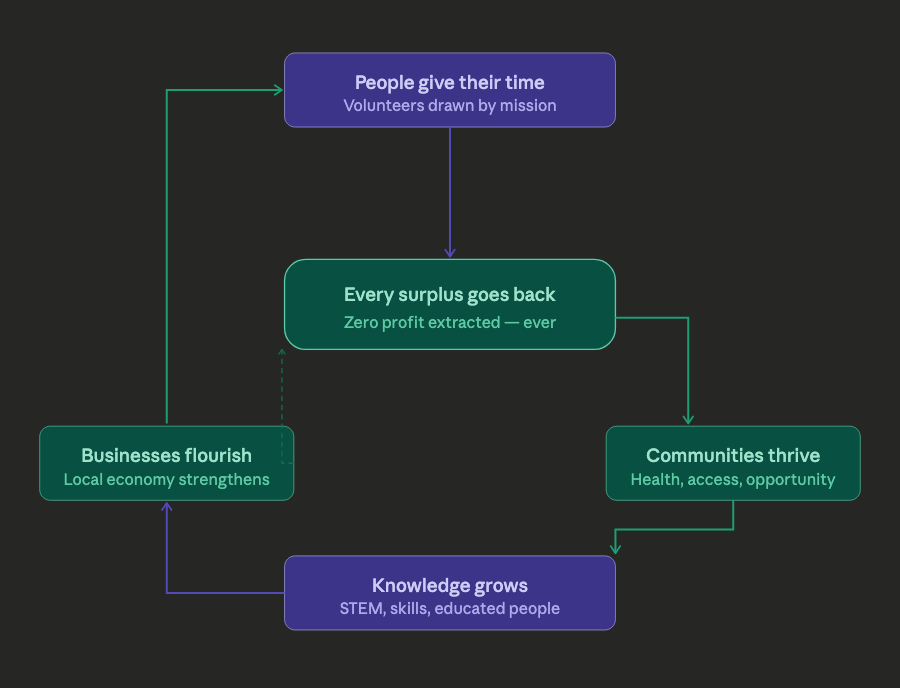
0-Margin is an operational model that prioritises sustainability, local benefit, and reinvestment over profit extraction.
Under this model, activities are structured to remain viable while ensuring that value generated by the project is returned to the communities and systems involved.
Where margins exceed a limited threshold, for example 5%, the surplus is redirected to clearly defined social and operational objectives: community education, local support programmes, staff remuneration above inflation, and progressive reduction in product prices where feasible. The phased approach below is designed to implement this model over time.
Establish formal partnerships with local NGOs through targeted technical assistance, provision of essential hardware, and delivery of training programmes that create the basis for sustained local capacity.
Establish a permanent in-country presence and develop 0-Margin initiatives that strengthen local businesses, expand economic opportunity, and respond to the needs identified during Phase 1.
Replicate the model in additional countries while strengthening cooperation across partner contexts, reinforcing local support systems, and facilitating the exchange of expertise, tools, and operational knowledge.
Engage mission-aligned partners to scale the model within the country, strengthen operational capacity, and consolidate a self-sustaining 0-Margin approach. Expand the network of community-rooted initiatives in order to strengthen solidarity, exchange, and mutual support across local contexts.